

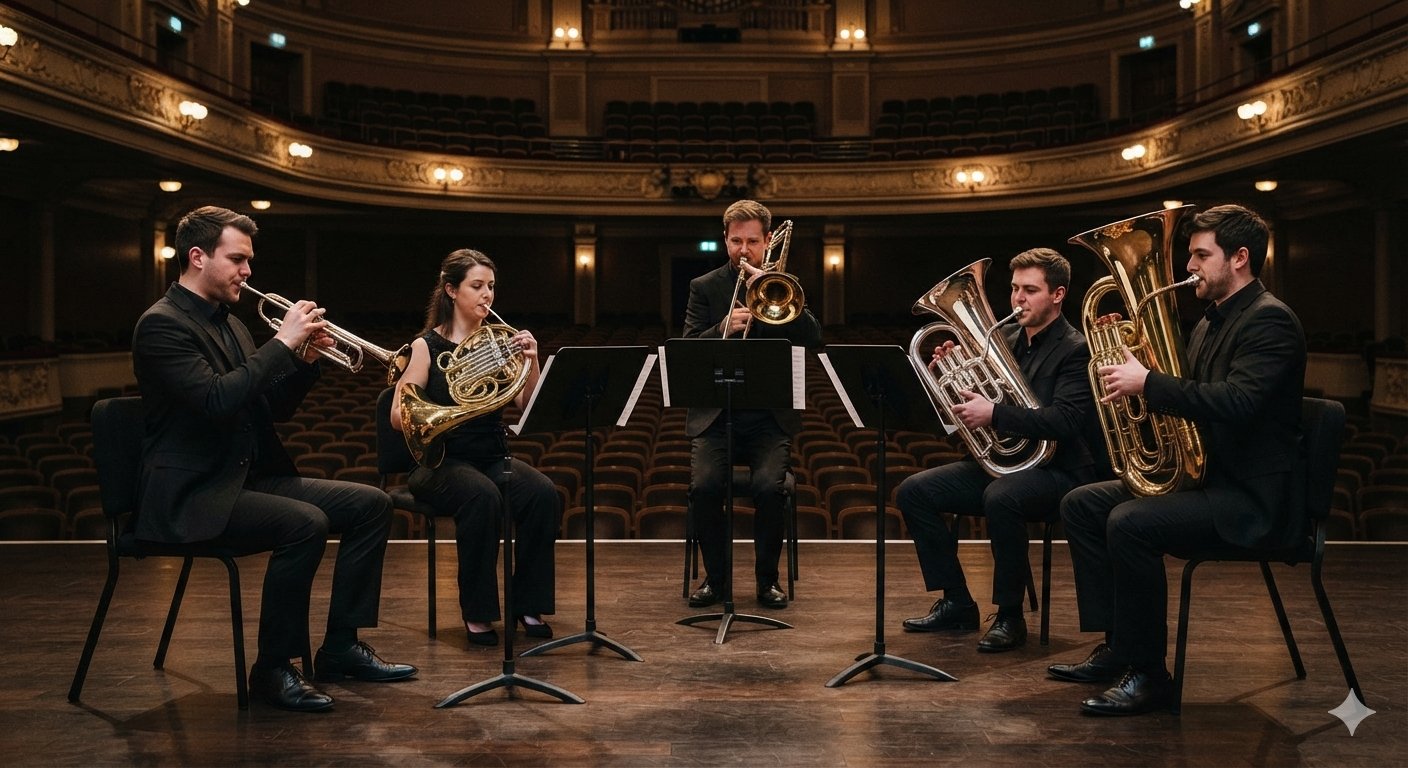
A brass instrument produces sound when a player creates vibration with their lips against a mouthpiece. From the commanding trumpet to the deep tuba, these instruments have shaped orchestral music, jazz, marching bands, military ensembles, and popular music for centuries. Their defining qualities include bright projection, expressive dynamics, and remarkable tonal flexibility.
The term covers several families of musical instruments, each with its own range, technique, and role. Understanding those differences makes it easier for students, performers, and music enthusiasts to identify the right instrument for their needs.
What Is a Brass Instrument?
A brass instrument is generally made from metal tubing, although its classification is based primarily on how the sound is produced, not simply the material used. The player generates vibration with their lips, while the instrument amplifies and shapes that vibration through its tubing and bell.
Pitch can be changed by altering lip tension, airflow, and the effective length of the tubing. Depending on the design, players use valves or a slide to access different notes.
Common examples include:
- Trumpet
- Trombone
- French horn
- Euphonium
- Tuba
- Cornet
Main Types and Their Musical Roles
Each instrument has a distinctive range and character. The following comparison provides a useful starting point.
| Instrument | Typical Character | Common Musical Roles |
|---|---|---|
| Trumpet | Bright and penetrating | Jazz, orchestras, bands |
| Trombone | Powerful and flexible | Jazz, concert bands, orchestras |
| French horn | Warm and mellow | Orchestral and chamber music |
| Euphonium | Rich and lyrical | Concert and brass bands |
| Tuba | Deep and resonant | Bass foundation, ensembles |
A trumpet often carries melodies or fanfare-like passages, while the trombone can provide dramatic accents, harmonies, and gliding effects. The French horn is valued for its rounded orchestral tone. Euphoniums offer a warm middle-to-low register, while tubas provide much of the low-end foundation in an ensemble.
How Does It Produce Sound?
The basic process starts with the player’s lips vibrating against the mouthpiece. That vibration travels through the air column inside the tubing. Valves or a slide change the effective length of that column, allowing different pitches to be produced.
Breath control, embouchure, articulation, and listening skills all influence the final tone. Developing these fundamentals is usually more valuable than simply trying to play loudly.
💡 Pro Tip: Beginners should prioritize comfortable technique and a clear, controlled tone before focusing on volume or extremely high notes.
Choosing the Right Brass Instrument
The best choice depends on age, musical interests, physical comfort, available instruction, and the ensemble in which the player hopes to participate.
A useful approach is:
- Listen to different instruments in live performances or quality recordings.
- Try the mouthpiece and instrument under qualified supervision.
- Consider the instrument’s size, weight, and maintenance requirements.
- Think about whether the goal is jazz, orchestral music, marching band, concert band, or casual playing.
- If possible, seek guidance from a music teacher before purchasing an expensive instrument.
Beginners should also consider renting before buying. This can provide an opportunity to discover whether the instrument feels comfortable and suits their musical interests.
Care and Maintenance
Regular maintenance helps preserve both performance and instrument condition. Players should follow the manufacturer’s care instructions, keep the mouthpiece clean, and use the appropriate valve oil or slide lubricant when required.
For older or heavily used instruments, professional servicing may be worthwhile. Dents, stuck valves, damaged slides, or persistent air leaks can affect playability and should be assessed by a qualified repair technician.
📌 Key Takeaway: The right brass instrument is not necessarily the largest, loudest, or most expensive option. Comfort, musical goals, proper technique, and suitable instruction are far better guides.
Frequently Asked Questions
Which brass instrument is easiest for beginners?
There is no single easiest option for every student. Trumpet, cornet, and euphonium are common starting choices, but comfort and instruction matter greatly. A beginner who enjoys the instrument’s sound is also more likely to practice consistently, making personal preference an important part of the decision.
What is the difference between brass and woodwind instruments?
The main distinction is how sound begins. Brass players create vibration with their lips, whereas woodwind instruments generally use a reed or an air stream directed through an opening. The materials used to construct an instrument are not always enough to determine its instrument family.
Is a brass instrument difficult to learn?
Learning requires coordination between breathing, embouchure, fingering or slide movement, articulation, and musical reading. Early progress can feel challenging, particularly when developing a consistent tone. Regular practice with correct technique and qualified feedback can make the learning process considerably more manageable.
Which brass instrument has the lowest pitch?
The tuba is generally the lowest-pitched standard member of the brass family used in concert and orchestral settings. Its large tubing and wide bell allow it to produce a deep, resonant sound that supports bass lines and reinforces the harmonic foundation of an ensemble.
How often should brass instruments be cleaned?
Cleaning frequency depends on the instrument, playing schedule, environment, and manufacturer’s recommendations. Mouthpieces benefit from regular cleaning, while internal and mechanical components require appropriate maintenance. Players should avoid unsuitable household chemicals and consult the manufacturer’s care guidance or a qualified repair technician when uncertain.
Conclusion
A brass instrument combines breath, lip vibration, precision, and carefully engineered tubing to create a remarkably expressive musical voice. From the brilliant trumpet to the resonant tuba, each design serves a distinct purpose.
For anyone beginning their musical journey, the smartest choice is one that feels comfortable, matches their musical ambitions, and encourages consistent practice. With sound technique and proper care, a brass instrument can remain a rewarding part of a musician’s life for many years.
